
Most games are decided by who is forced to open the long chains. If the rules are still fuzzy, start with Dots and Boxes rules. Once you can draw edges cleanly, practise third-side control, chain tempo, and parity.
Do not gift the third side
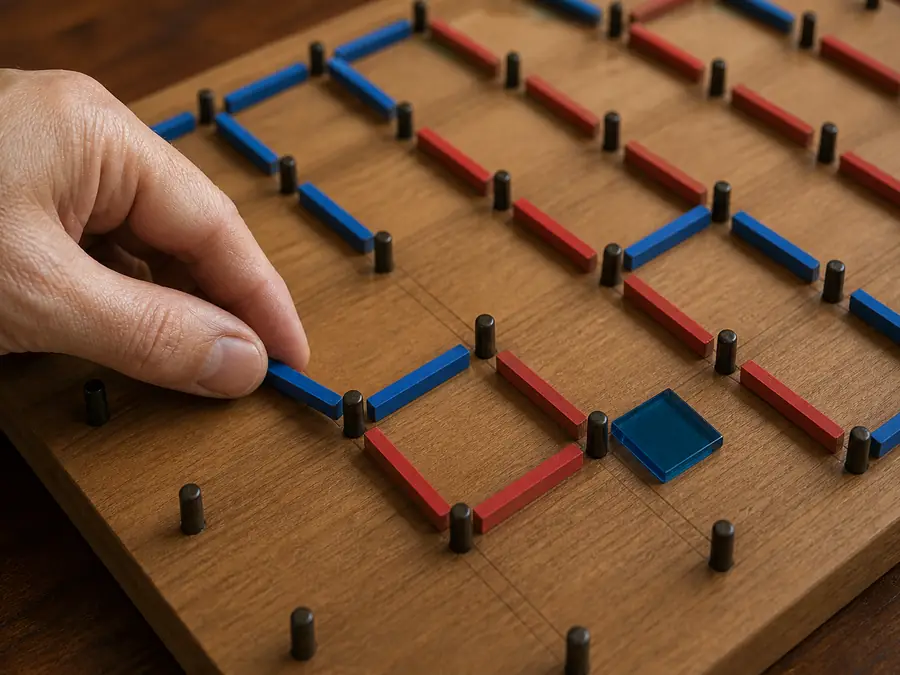
When a box already has two sides, drawing the third often hands the whole box to your opponent. In the middlegame, prefer “safe” edges that leave no box with three sides until the structure is ready.
If you cannot see it at a glance, count how many sides each neighbouring box already has. Most early losses in Dots and Boxes start because the third side was never noticed.
Control who opens chains
Boxes that are missing edges often link into a chain. Whoever is forced to draw into that chain may watch the opponent claim the whole run. Good play is often about making the other side open the chain, not diving in for one quick box.
Sometimes you refuse an immediate claim on purpose so the opening duty stays with them. Tempo often matters more than one dramatic scoop.
Double deals and double-crosses
One edge can threaten two third sides at once, so the opponent can only stop one. Or you leave a “double-cross” shape where taking one chain still forces them to hand the next chain back. Whenever you see a claim, ask three questions: does this open their long chain, who controls the next run after you finish, and did you just give away the move?
Count parity in the endgame
Whether a long chain has an odd or even number of boxes often decides who claims one more box. Use replay to check whether you miscounted a chain length and handed the tempo across. Hints follow your current AI level, so they are best used to check your parity judgement, not replace it.
Give each game one job
The fastest way to improve is not to rush through many games, but to give each game one job: three games where you only refuse third sides, or three games where every possible chain opening gets a second look. Afterward, replay two turning points—the gifted third side, and the chain you opened too early.
FAQ
Where should I draw first?
There is no single answer. Many players start with safe edges near the border so the centre does not grow third sides too early.
Should I always claim a box when I can?
Not always. Ask whether the claim opens their long chain or flips endgame parity against you.
Do hints secretly use the strongest level?
No. Hints use the same search and time budget as the AI level currently selected in the sidebar.
What is worth practising first?
First learn not to gift the third side. Then add chain control and endgame parity.
